Studio — Août 2026 — 5 min read
From stone to face
How a photograph of a mineral becomes a square of silk: framing, symmetry, scale.
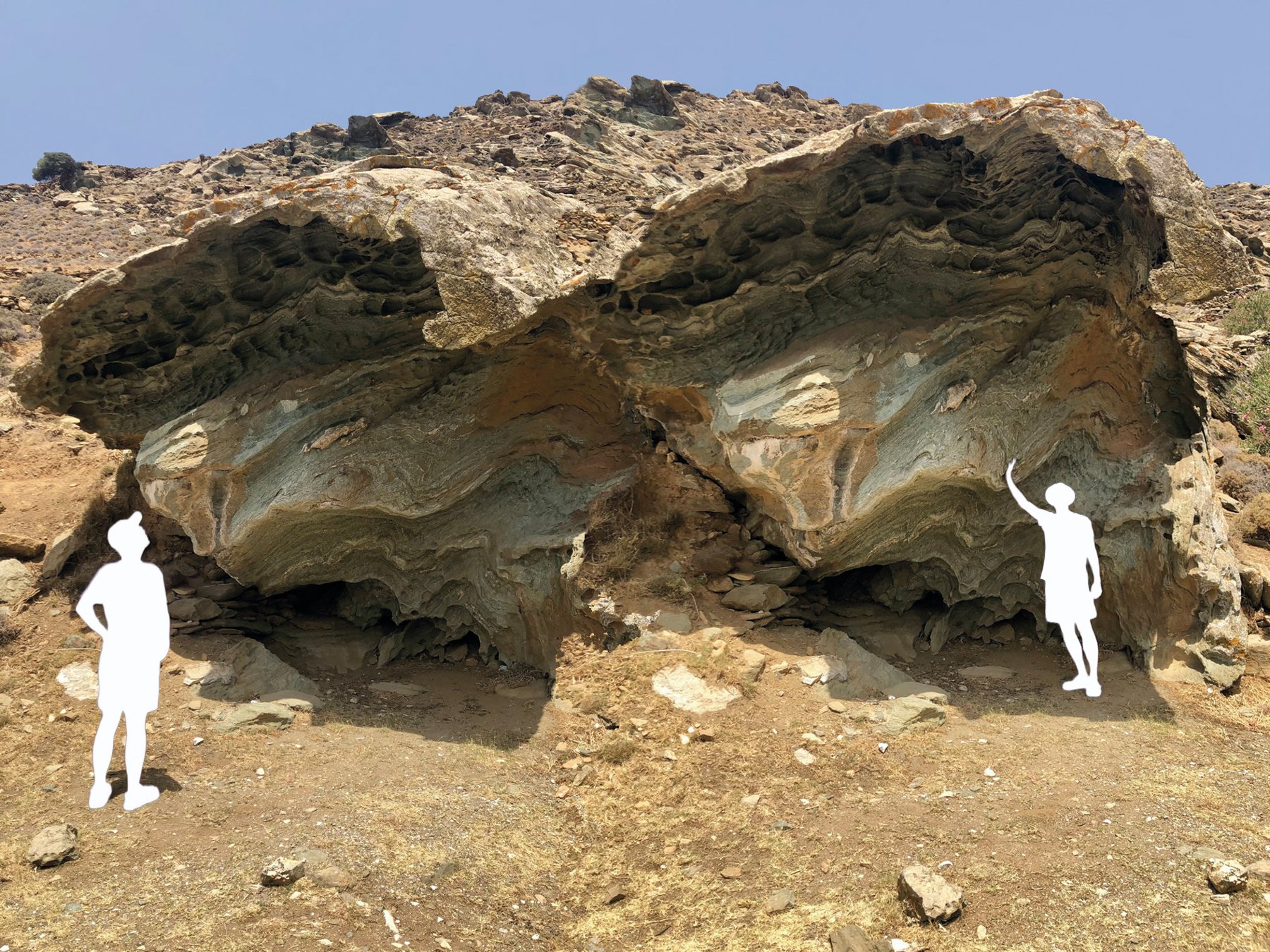
A rock photographed from afar remains a landscape. Photographed a few centimetres away, it loses its scale: strata become features, fractures become eye sockets, oxide deposits become hair. It is this shift — the moment matter looks back — that opens the Portraits Minéraux collection.
The framing
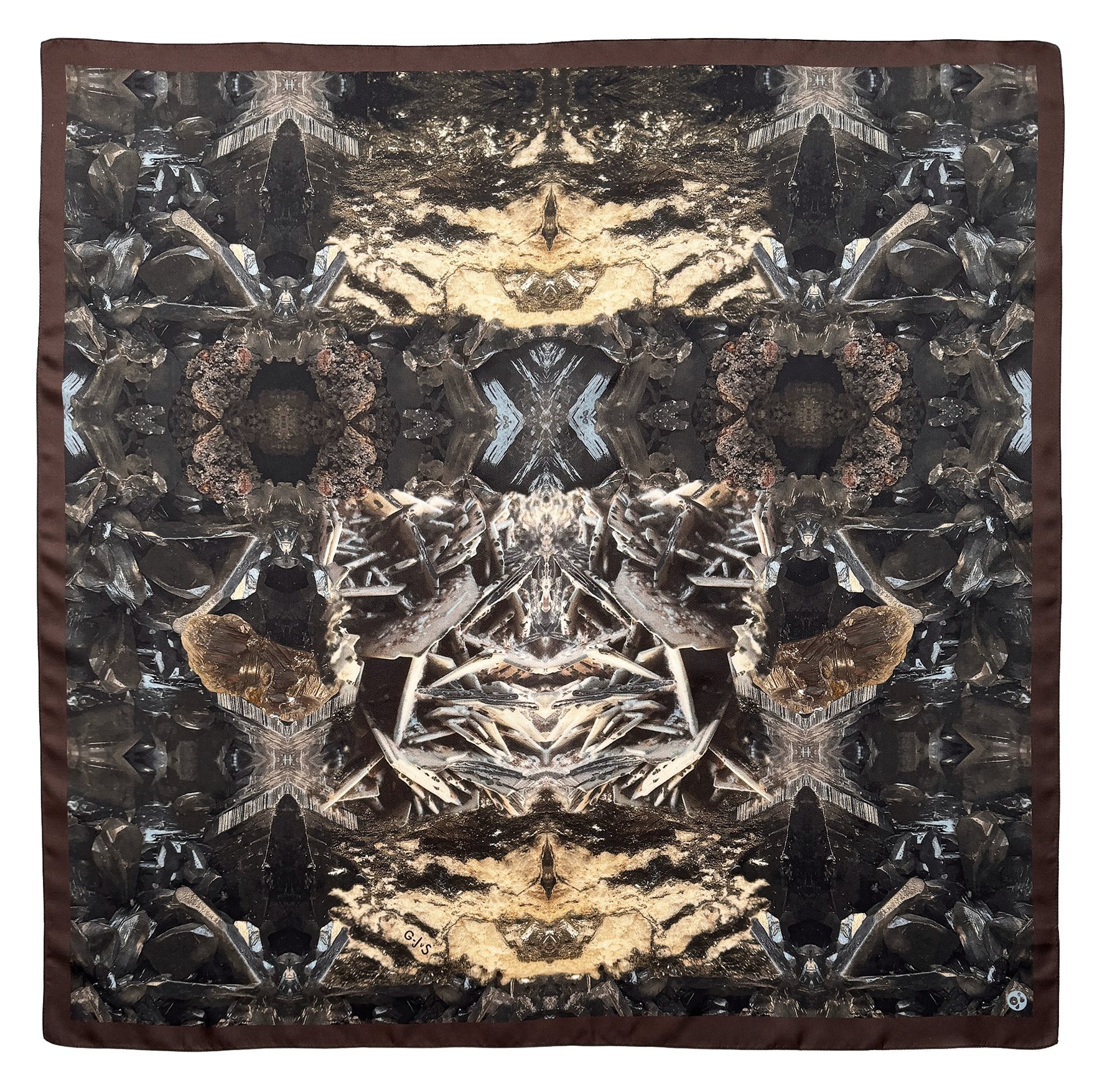
No pattern is drawn. Each image comes from a single shot, chosen for its density and for the way light catches the facets. The work then consists of removing: tightening, straightening, stripping away anything that might recall a real scale.
The symmetry
The image is mirrored. This gesture, ancient in the history of textiles, reveals a central axis around which the eye spontaneously reconstructs a face. Nothing is added: it is the gaze that completes it.
The pattern is not invented, it is found — then simply set at the right distance.
The scale
The same pattern behaves differently depending on the format. At 50 centimetres, it becomes graphic, almost a jewel of cloth. At 70, it frames the neck and the face. At 90, it regains its dimension as an image and can be stretched, framed, displayed.